
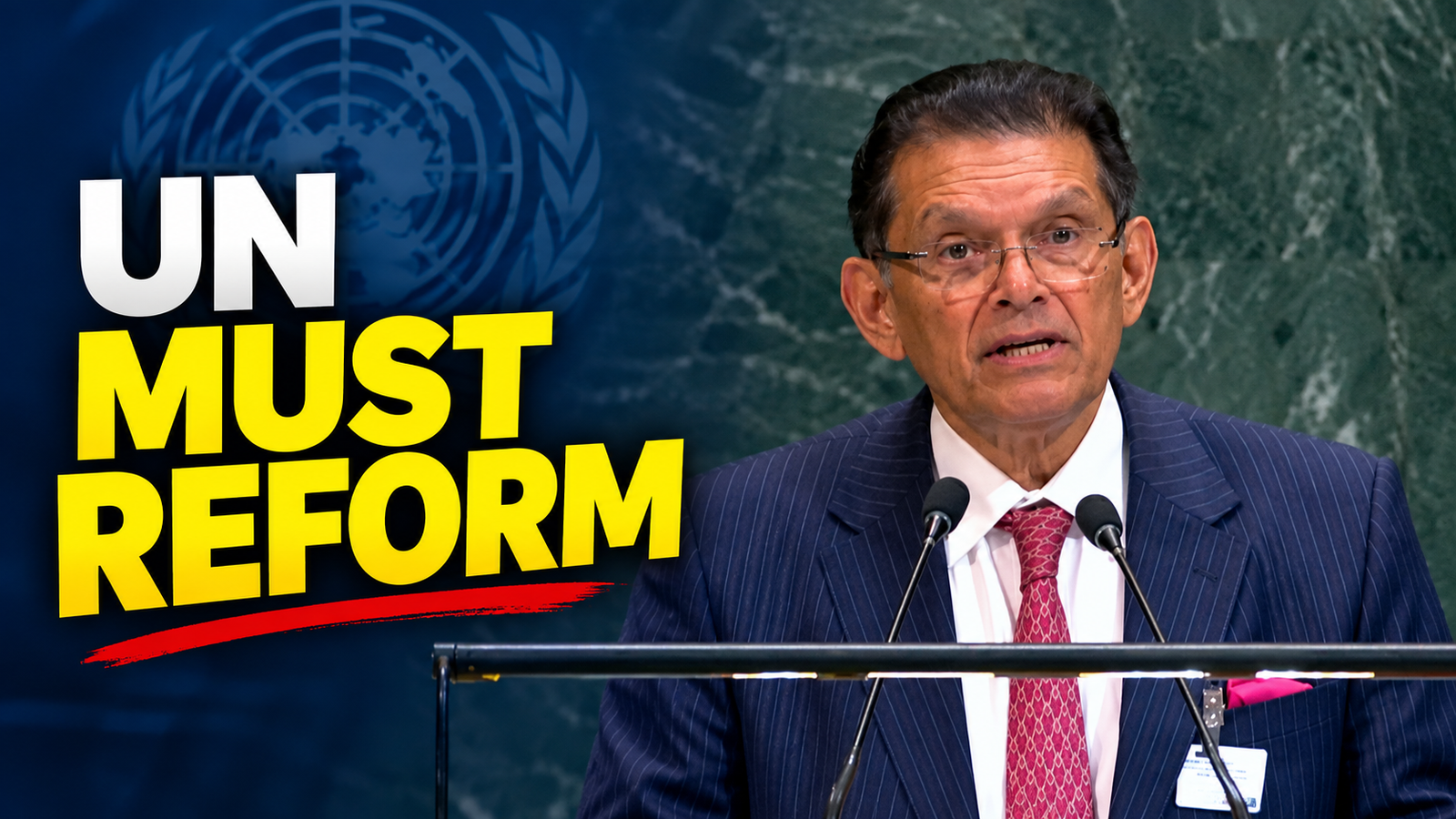
Bangladesh’s Khalilur Rahman didn’t waste time softening his message. Opening the 81st session of the UN General Assembly, the incoming president reminded delegates why the institution exists in the first place — born out of a war nobody wanted to repeat, now home to 193 nations that, so far, have managed to avoid a third one.
That’s the achievement. But Rahman made clear it isn’t enough anymore.
“The United Nations has persevered,” he said. “Not because it is perfect, but because it is irreplaceable.” Then came the sharper line, the one clearly meant to sting a little: people outside UN headquarters have stopped asking whether the organization still exists. What they want to know is whether it does anything.
He didn’t dodge the record. Yes, the UN is still showing up — helping Rohingya refugees get by in Cox’s Bazar, backing recovery work in Iraq, staying present in Haiti. But set that against Gaza, Sudan, Ukraine, Myanmar, and the gaps get harder to explain away. Civilian protection and international law, he argued, can’t bend depending on whose conflict it is.
His fix starts with the Security Council. He wants it to stop sitting on the sidelines when peace is on the line, and to finally start looking like the world it claims to represent — not the one that existed when it was built.
Africa’s exclusion came up by name. Rahman didn’t hedge: “Africa needs to be at the table, not on the menu.”